Rose oil has been cherished for centuries for its soothing fragrance, skincare benefits, and natural healing properties. Making rose oil at home is not only simple but also allows you to control the ingredients, ensuring a chemical-free product that is gentle on skin and hair. In this guide, we will explore step-by-step methods for making rose oil, the best techniques for infusion, the types of carrier oils to use, and practical tips for storage and usage. Whether you want rose oil for your face, hair, or for aromatherapy, this guide will provide everything you need to know.
Understanding Rose Oil
Rose oil is an aromatic oil extracted from rose petals. There are two main types: rose-infused oil and rose essential oil. Homemade methods generally produce rose-infused oil, which carries the fragrance and benefits of roses without the intensity of commercially distilled essential oils. Rose oil is commonly used for moisturizing skin, adding natural fragrance, calming the mind, and nourishing hair. Understanding the type of rose oil you want to make is the first step toward a successful infusion.
Ingredients You Will Need
To make rose oil at home, you will need a few simple ingredients:
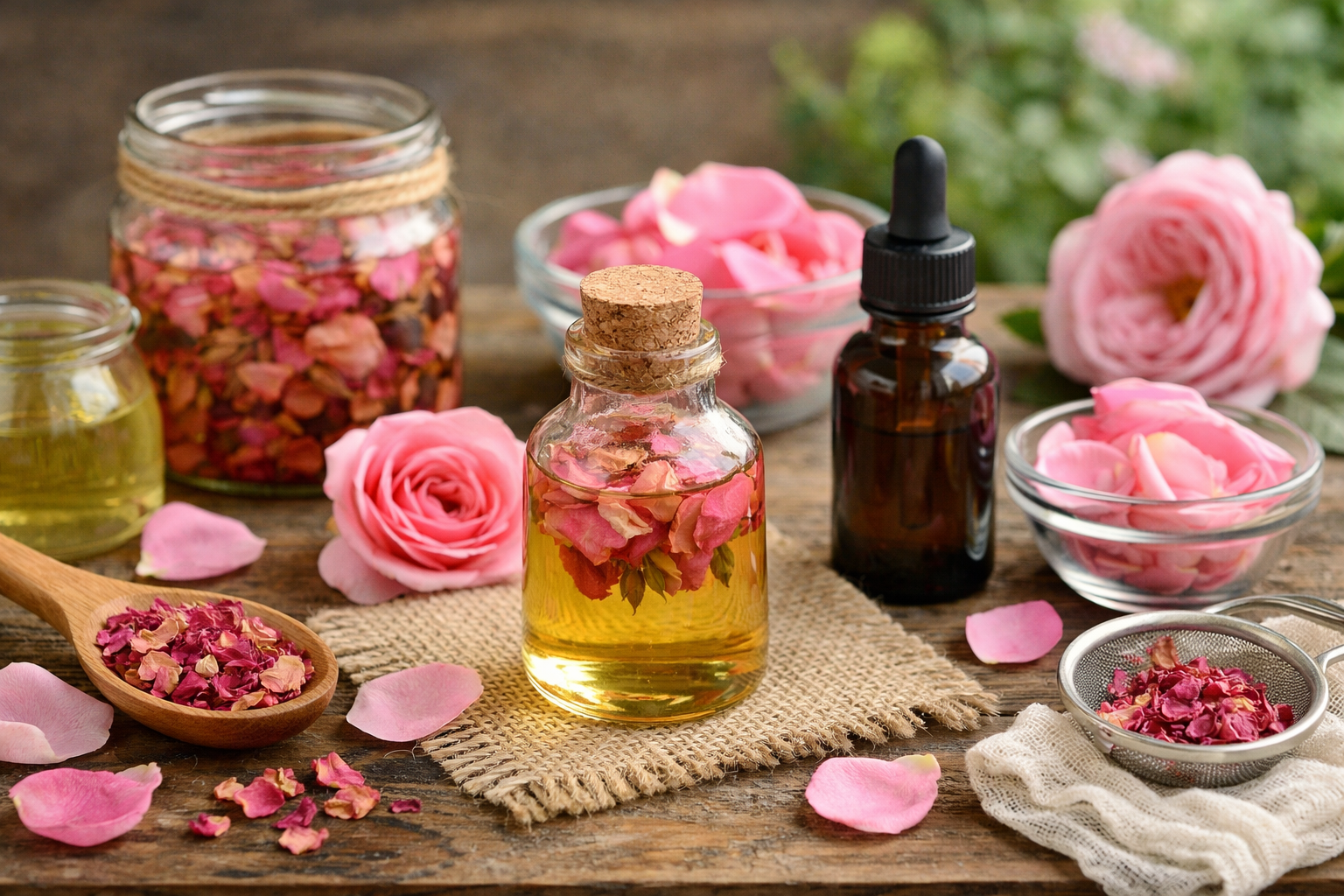
- Fresh or dried rose petals (preferably organic and pesticide-free)
- Carrier oil (almond oil, jojoba oil, coconut oil, or olive oil)
- A clean glass jar with a tight lid
- A fine strainer or cheesecloth
- A dark glass bottle for storage
Choosing the right rose petals and carrier oil is essential to produce high-quality rose oil. Fresh petals give a stronger fragrance, while dried petals can be stored longer and used throughout the year.
Step-by-Step Method to Make Rose Oil
1. Prepare the Rose Petals
Start by gently plucking the rose petals and removing any stems or leaves. Wash them carefully and allow them to dry completely. Moisture can cause mold and spoilage during the infusion process, so it is crucial that the petals are dry before use.
2. Choosing the Carrier Oil
Select a carrier oil based on your purpose. Almond oil is excellent for facial skin, jojoba oil mimics natural skin oils, coconut oil is nourishing for hair, and olive oil works well for overall body use. Pour the carrier oil into a clean jar, enough to submerge the rose petals fully.
3. Cold Infusion Method
Cold infusion is a gentle way to extract the fragrance and properties of roses. Place the dried or fresh petals in the jar with carrier oil and seal it tightly. Store the jar in a sunny window or a warm place for 1–2 weeks, shaking it gently every day. After the infusion period, strain the oil using a cheesecloth or fine strainer into a dark glass bottle.
4. Heat Infusion Method
If you prefer a faster method, you can use heat infusion. Place the petals and carrier oil in a double boiler over low heat for 2–3 hours, ensuring the temperature remains low to avoid burning the petals. Once infused, allow the oil to cool, strain it, and transfer it to a dark bottle. Heat infusion produces rose oil more quickly but may slightly alter the fragrance compared to cold infusion.
Cold vs Heat Infusion: Which is Better?
Cold infusion preserves the natural aroma and delicate compounds of rose petals better than heat infusion. It is ideal for facial oils and sensitive skin applications. Heat infusion, on the other hand, is faster and suitable for general skincare or hair oil. Both methods are effective, and the choice depends on your priorities: fragrance intensity, time, and intended use.
Benefits of Homemade Rose Oil
Homemade rose oil has multiple benefits:
- Moisturizes and softens skin naturally
- Reduces redness and inflammation
- Provides a calming and soothing aroma
- Promotes healthy hair and scalp
- Adds natural fragrance to cosmetics and bath products
Unlike store-bought rose oils that may contain synthetic chemicals, homemade rose oil is natural, gentle, and customizable according to your preferences.
Tips for Storing Rose Oil
Proper storage ensures your homemade rose oil remains fresh and effective. Keep the oil in a dark glass bottle, away from direct sunlight and heat. Stored properly, it can last 6–12 months. Always use clean hands or droppers when handling the oil to prevent contamination.
Using Rose Oil for Face and Hair
For facial use, apply a few drops of rose oil to your skin after cleansing, either directly or mixed with your moisturizer. For hair, massage the oil gently into the scalp and leave it for 30–60 minutes before washing. Rose oil can also be added to bath water for a fragrant, relaxing experience.
Common Mistakes to Avoid
- Using wet rose petals, which can lead to mold growth
- Overheating oil during heat infusion
- Storing oil in plastic containers or sunlight
- Expecting commercial essential oil strength from a home infusion
Avoiding these mistakes ensures that your homemade rose oil retains its quality, fragrance, and therapeutic properties.
Conclusion
Making rose oil at home is a rewarding and simple process that allows you to enjoy the natural fragrance and skincare benefits of roses without harmful chemicals. By following proper methods for cold or heat infusion, choosing the right carrier oil, and storing the oil correctly, you can create high-quality rose oil for your face, hair, or aromatherapy. Homemade rose oil is versatile, sustainable, and a wonderful addition to your natural beauty routine.
FAQs
1. How long does homemade rose oil last?
Homemade rose oil can last 6–12 months when stored in a dark glass bottle away from sunlight and heat.
2. Can I use wet rose petals for oil infusion?
No, wet petals may cause mold and spoil the oil. Always use dry petals for infusion.
3. Which carrier oil is best for making rose oil?
Almond oil is best for skin, coconut oil for hair, and jojoba oil for sensitive facial skin.
4. What is the difference between rose-infused oil and rose essential oil?
Rose-infused oil is made at home and contains natural fragrance, while rose essential oil is commercially distilled and more concentrated.
5. Can I use rose oil for hair growth?
Yes, massaging rose oil into the scalp nourishes hair and promotes healthy growth while adding a pleasant fragrance.